

Proposed 5% U.S. Remittance Tax: Implications for NRIs, Visa Holders, and Global Families
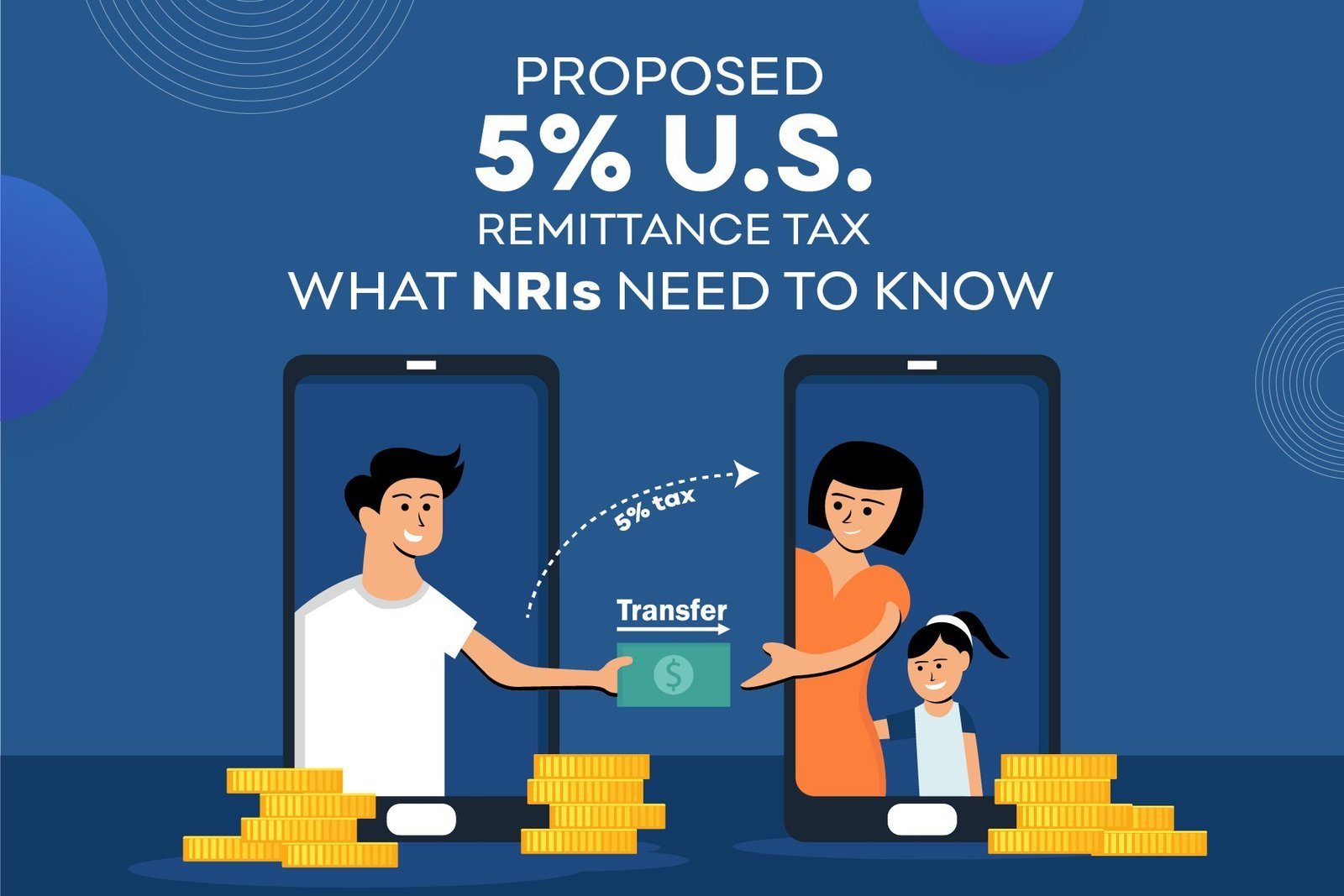
A proposed U.S. bill—formally titled The One Big Beautiful Bill—is drawing attention for its potential impact on non-U.S. citizens, especially the Indian diaspora. If enacted, the legislation would impose a 5% flat tax on all outbound international remittances made by individuals who are not U.S. citizens.
This move could significantly disrupt financial routines for families, students, professionals, and business owners. At USAIndiaCFO, we are actively monitoring the situation and helping clients prepare for the potential outcomes.
Key Provisions of the Bill
- Tax Scope: A flat 5% tax on all international remittances made by non-U.S. citizens, irrespective of the amount or purpose.
- Affected Individuals: Includes H-1B and L-1 visa holders, F-1, M-1, and J-1 students, green card holders, and undocumented immigrants.
- Collection Method: Tax will be withheld at the time of transfer by banks, money transfer services, and digital payment platforms.
- No Exemptions: The tax applies to all transfers—no exceptions for education, medical expenses, or family support.
- Projected Impact: With $32 billion remitted from the U.S. to India in 2023, this could result in an estimated $1.6 billion annual tax burden on Indian remitters.
Implementation Timeline
The bill is currently under review in Congress. If passed, implementation could begin as early as July 2025.
Why This Matters
- Added Costs for Families and Businesses
Each $10,000 remitted to India would now carry an additional $500 tax burden. This can significantly impact families supporting dependents or entrepreneurs managing India-based operations.
- Impact on Students and Dependents
Students and families sending money for tuition, healthcare, or daily expenses may need to remit higher amounts to cover the new tax, reducing the net funds received.
- Reduced NRI Investment in India
The tax may deter NRIs from investing in Indian startups, real estate, or financial markets, as retaining funds in the U.S. could become more cost-effective.
- Fewer Efficient Transfer Options
The absence of exemptions makes even small or frequent transfers inefficient. NRIs may need to restructure the way they move capital internationally.
Strategic Steps You Can Take
- Advance Transfers Before the Law is Enacted
Consider front-loading larger payments ahead of the implementation date to avoid the new tax burden.
- Review Your Financial Workflows
Audit all regular and one-off transfers. You may want to consolidate smaller remittances or revise the frequency and structure of international payments.
- Consult Cross-Border Tax Experts
Professionals can help you explore potential legal avenues to minimize this tax through restructuring, double taxation treaties, or alternate investment channels.
- Explore U.S.-Based India-Linked Investment Options
To retain India market exposure without transferring funds, consider investing in U.S.-listed ETFs or mutual funds with Indian portfolios.
- Monitor Legal Developments Closely
The bill’s final language and scope may change. Stay informed through credible news and financial advisory firms to remain ahead of any changes.
USAIndiaCFO’s Perspective
At USAIndiaCFO, we support NRIs, Indian-origin entrepreneurs, and global families navigating cross-border financial challenges. Our team is currently:
- Reviewing and optimizing remittance strategies
- Recommending cost-effective and compliant approaches
- Advising on long-term capital flow planning and tax impact mitigation
If the bill is enacted, it will introduce a new layer of complexity. Our goal is to simplify your decision-making and integrate this development into your broader financial planning.
About USAIndiaCFO
USAIndiaCFO is a cross-border financial consultancy supporting NRIs, Indian entrepreneurs, and global families. Our services include:
- U.S. and India tax compliance
- Cross-border investment advisory
- Regulatory planning and business setup
- Wealth and capital structuring
We act as your financial bridge between the U.S. and India.
Schedule a Consultation
Concerned about the impact of the proposed remittance tax? Let us help.
Book a personalized consultation:
https://usaindiacfo.com/contact-us
This article is general information, not legal, tax or financial advice. Rules change and every situation is different — please speak to a qualified advisor before acting on it.

Have a question about this?
Let us discuss your requirements on a no-obligation discovery call, anytime as per your convenience.